The rise of consumer-driven healthcare: How patients choose providers today, and what it means for the future of care
Subscribe to our Newsletter
Something happened at CES, HIMSS, and the other conferences we’ve participated in this year that has stayed with me. Between the demos, the journalist meetings, and the awards, the moments that had the most impact were the non-industry people - not surgeons, not hospital executives - who stopped at our booth and asked if they could check out our software. Patients who, after experiencing what we were demonstrating, said they wanted to bring it up with their own surgeon.
It wasn’t exactly surprising, rather quite interesting, because it points to a shift that research is now confirming in hard numbers: patients are no longer passive recipients of care. They are active, informed consumers, and they are changing healthcare from the outside in.
The path to care has gone digital
Press Ganey’s Consumer Experience Trends in Healthcare 20201 report found that 61% of patients now rely on digital resources, online search, review sites, and insurance directories, among other sources, in order to find a primary care provider. That is nearly twice as many as those who rely on word-of-mouth referrals. And once referred, 88% still go online to read reviews before booking, and nearly half will not make an appointment if the provider’s listing is nonexistent or incomplete.
This is not niche behavior – it’s mainstream. The Beryl Institute - Ipsos PX Pulse (February 2025) reinforces just how high the stakes are: 92% of patients say having a good experience at the doctor’s office is either extremely or very important to them. The top reasons? “My health and well-being are important to me;” “I want to know my physical needs are being taken seriously;” “I want to be treated with respect.” These have consistently been the leading responses for the past five years2.
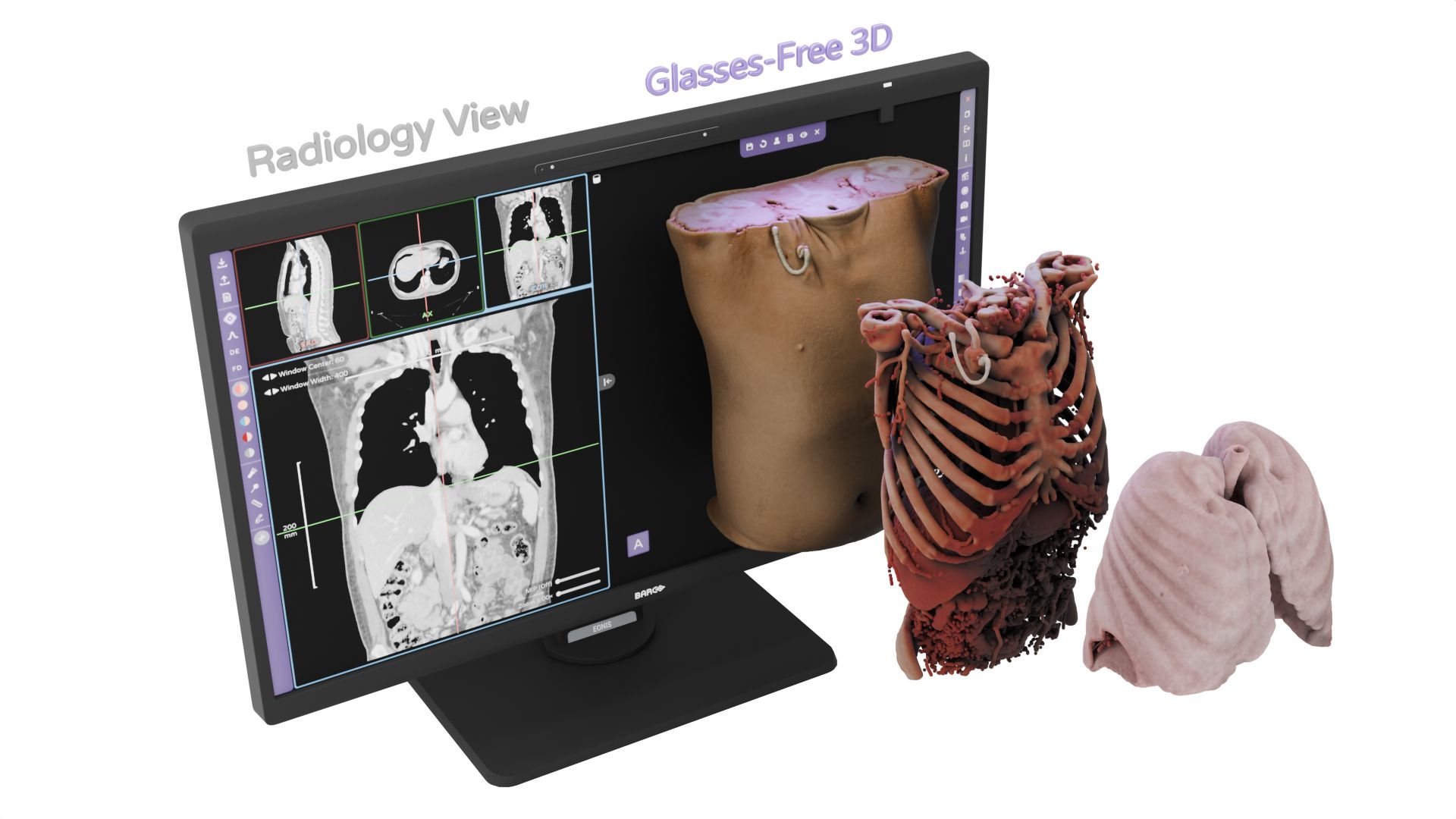
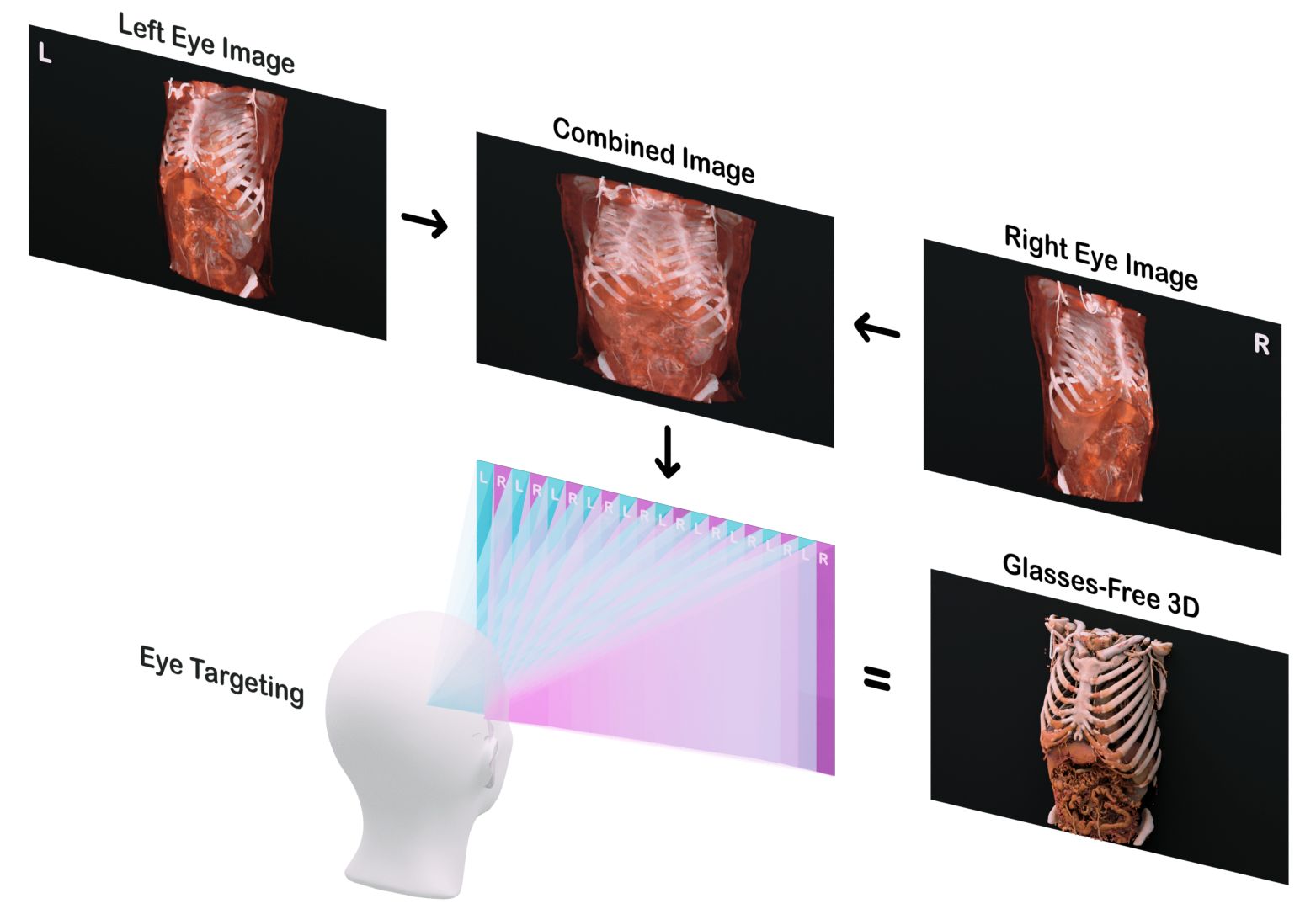
Patients are not shopping for amenities. They are looking for dignity, understanding, and a genuine sense that they are part of their own care. What strikes me most is patients' reactions when they see their own anatomy in 3D for the first time. It’s akin to turning on a light switch. For the first time, they can truly see what is going on in their bodies. They can better understand the pathology and, in turn, can take a more active and informed part in the treatment.
The gap surgeons don’t see
Here is something that rarely gets discussed openly. Surgeons have spent decades training their brains to convert 2D medical images into 3D understanding. They do it automatically, easily, without thinking. Their patients cannot do this at all, and for no fault of their own, most surgeons don’t realize how profound that gap is.
When we show surgeons how their patients react to seeing a 3D visualization of their own anatomy for the first time, many are genuinely stunned. They had no idea how lost their patients felt during consultations or that many were leaving without truly understanding what was going to happen to them - or why.
This matters more than might seem important. A patient who doesn’t understand their diagnosis doesn’t just feel uncertain; they may not consent to the surgery at all, forsaking treatment, or they may seek a second opinion elsewhere, most likely to the same outcome. Outmigration driven by poor referral management is a known problem in hospital systems. Outmigration driven by a patient who simply didn’t feel informed enough to say “yes?” That is largely invisible, because most hospitals don’t track it. Surgeons are often so busy with consultations and procedures that they don’t notice whether a patient abandoned treatment.
At a poll we took at the last CNS conference, 97% of surgeons surveyed reported they were not using 3D imaging during their consultations, but 75% said they would, if it were available to them3. The problem is not willingness. It is awareness; awareness that the gap exists; and awareness that there is now a solution within reach.
Patient experience is a financial imperative, not a soft metric
The Deloitte Center for Health Solutions spent seven years studying the relationship between patient experience and hospital financial performance. Their findings were unambiguous: hospitals with excellent patient ratings had an average net margin of 4.7%, compared to 1.8% for low-rated peers, a gap that held even after controlling for hospital size, location, and payer mix. And again, the biggest driver of that gap was not hospital amenities, not VBP incentive payments (which accounted for only 7% of the effect). It was nurse communication, the quality of human connection in the room4.
The Beryl Institute–Ipsos data adds another layer. Across five years of tracking, patients have consistently said the same thing: 52% believe good patient experience directly contributes to good healthcare outcomes5. They are not separating the human experience from the clinical one. Neither should we.
The PX Pulse also found something that should give hospital leaders pause; fewer than 50% of Americans rate the quality of the U.S. healthcare system as good or very good, yet 92% say the experience matters deeply. There is a structural gap between what people need and what they feel they are getting.
The real friction is not technology - it is awareness
I am often asked about the barriers to adoption for tools like ours. People assume it is regulatory complexity, or IT security requirements, or budget cycles. Those are real. But the deeper friction is something else: most clinicians and hospital systems are not aware of just how acute the problem is.
They don’t realize how lost patients feel; they don’t see the consultations that didn’t convert; they don’t track the patients who went elsewhere. It’s not because of a better referral, but because they didn’t feel ready to say yes, and they don’t know that a solution exists, because no doctors or hospitals around them are using it yet. Instant 3D in consultation is still new enough that most surgeons have simply never encountered it.
The complexity of bringing innovation into healthcare is, in a strange way, a measure of how much it matters. Regulation and security reviews exist because the consequences of getting it wrong are real. What drives Avatar Medical is knowing that the consequences of not changing are just as real, they're just harder to see. I say this not as a criticism, but as an honest observation. Healthcare systems are designed to protect patients from harm. That instinct is right, but the cost of inaction, uninformed patients, missed surgeries, eroded trust, is also a form of harm. It is just harder to measure.
What patients actually want
The Beryl Institute–Ipsos PX Pulse offers one more data point worth considering - when asked who should control healthcare decisions, 57% of patients said control should be shared equally between the patient and doctor. Only 7% thought doctors should have more or all of the control6. Patients don't want to be managed through their care, they want to be part of it; giving them the ability to walk out of a consultation having understood what they just agreed to.
That is exactly what we see in our demos. When a patient sees their own anatomy in 3D, they stop being a passive recipient of a recommendation. They become someone who can ask real questions, understand real tradeoffs, and make a much better informed decision. The surgeon becomes a guide, and the consultation becomes a two-way conversation.
That is the shift we are working toward. Not replacing the human relationship at the center of care, but giving it better tools.
The opportunity ahead
The data is consistent across every report I have read recently: patients are more informed, more active, and more willing to move on if they don’t feel seen. The healthcare organizations that will thrive are the ones that meet them where they are with clarity, transparency, and genuine engagement, at every step of the care journey.
The patient journey has gone digital, but the care experience is still deeply human. The opportunity is in connecting the two and closing the gap between what patients need to feel truly informed and what they are currently being given.
We are building toward that. And based on what I observed and experienced at CES, RSNA, HIMSS and all the other conferences we’ve been to these past few months to launch Eonis Vision, patients are already asking for it.
Sources:
- Press Ganey, Consumer Experience Trends in Healthcare 2020. Doctor.com / Press Ganey, 2020.
- The Beryl Institute – Ipsos, PX Pulse: Consumer Perspectives on Patient Experience in the U.S. February 2025. theberylinstitute.org.
- CNS Congress surgeon poll on use of 3D visualization in consultations. October 2025.
- Deloitte Center for Health Solutions, The Value of Patient Experience: Hospitals with Better Patient-Reported Experience Perform Better Financially. 2016. Available at: https://www2.deloitte.com/content/dam/Deloitte/us/Documents/life-sciences-health-care/us-dchs-the-value-of-patient-experience.pdf
- The Beryl Institute – Ipsos, PX Pulse: Consumer Perspectives on Patient Experience in the U.S. February 2025. theberylinstitute.org.
- The Beryl Institute – Ipsos, PX Pulse: Consumer Perspectives on Patient Experience in the U.S. February 2025. theberylinstitute.org.